

What is an Escrow Account and How does it work?
An escrow account holds a deal’s funds with a neutral third party until the agreed terms are met, then releases them to the rightful recipient. It manages payments in sales, services, projects and contracts where payment and entitlement are separated by time or a required step.
How Does Escrow Work?
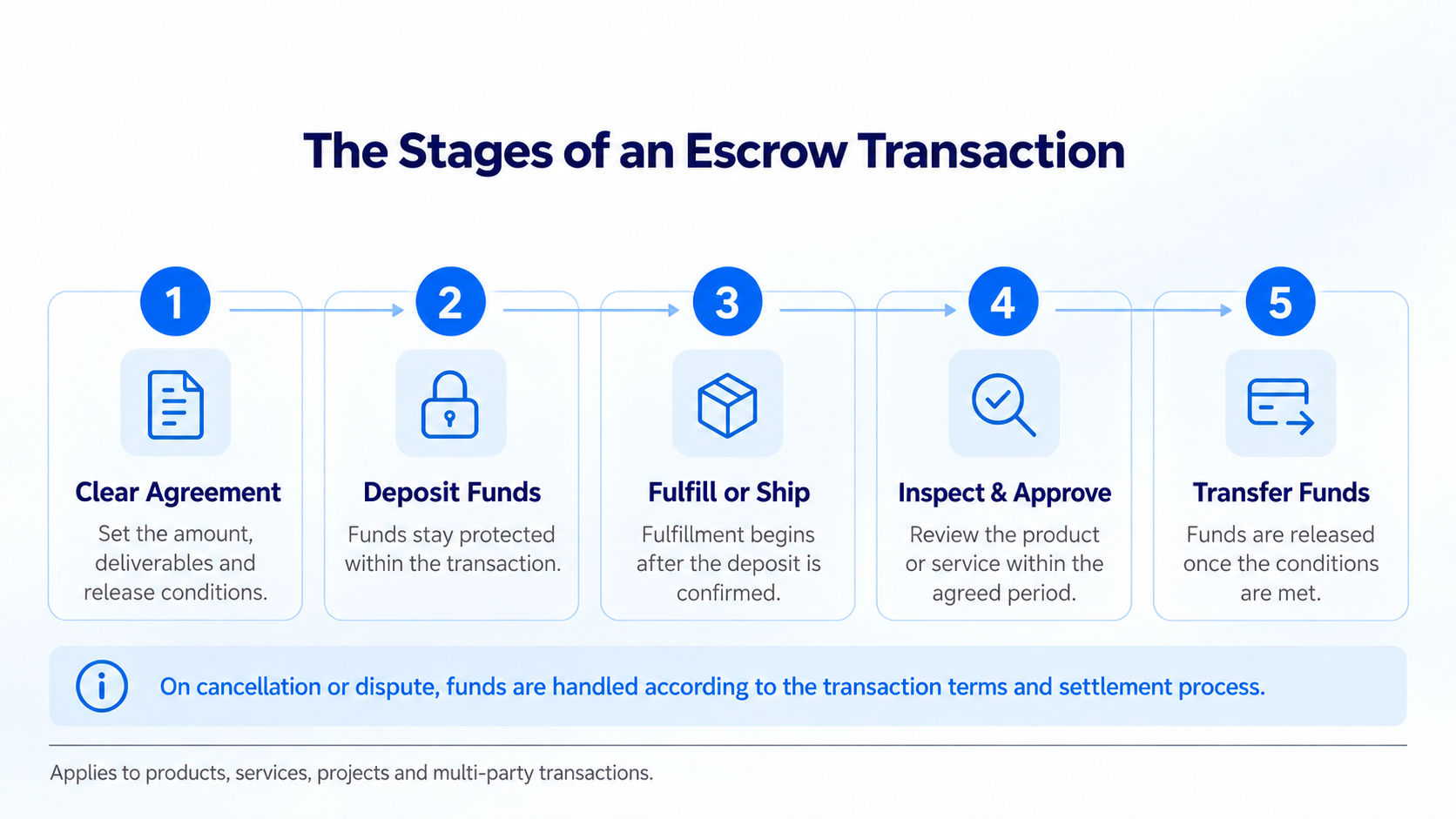
An escrow deal follows these steps:
- 1Agree on the Deal’s Terms: Both parties agree on the price, product or service, delivery or completion period, and terms to meet before funds are released.
- 2Deposit the Funds: The buyer or client deposits the funds in escrow, where they are set aside for the deal under its terms.
- 3Start Work or Delivery: The seller or provider receives confirmation that the funds are held, then ships the item, provides the service or completes the agreed milestone.
- 4Check the Agreed Terms: The buyer receives the item, or the client reviews the work within the set period, and checks it against the agreed details.
- 5Release Funds: Once the release terms are met, the funds leave escrow and go to the rightful recipient.
If the deal is cancelled or a dispute arises, the funds remain subject to its terms and dispute process. The approved outcome determines whether money is refunded, released or split between the parties.
Escrow Benefits for Buyers and Sellers
Escrow helps manage the financial relationship between parties, especially when payment and delivery occur at different times. Key benefits include:
- Confirms to the seller or provider that funds are deposited before they deliver.
- Clarifies the terms that make payment due before the deal begins.
- Helps manage deals with several milestones or more than one recipient.
- Links fund movements to the deal’s details, rather than treating them separately.
- Sets a clear process for handling funds if the outcome changes or a dispute arises.
Escrow for Products and Services
In a sale, the buyer deposits the price in escrow and the seller gets confirmation before delivery. The funds are released to the seller once the deal’s agreed terms are met.
A buyer in Jeddah wants a used computer from a seller in Riyadh. They agree on its model, price, condition, accessories and inspection period. The buyer then deposits the price in escrow.
The seller ships the computer once the deposit is confirmed. The buyer inspects it within the set period and accepts it if it meets the agreed specifications. The price is then released to the seller.
This suits sales of electronics, vehicles, watches, collectibles and high-value goods, as well as other purchases where payment and delivery happen at different times.
Escrow for Projects and Contracts
Projects differ from buying ready-made goods: work may take weeks or months, with payments due at several stages or outcomes.
In these cases, you can use escrow to manage the project budget and tie payments to work completed. The client knows what must be delivered before each payment is due, while the provider or supplier knows the amount linked to each stage.
This applies to construction, consulting, software development, design, supply and service contracts and other work with payments spread across stages.
Escrow Accounts vs. Direct Payments
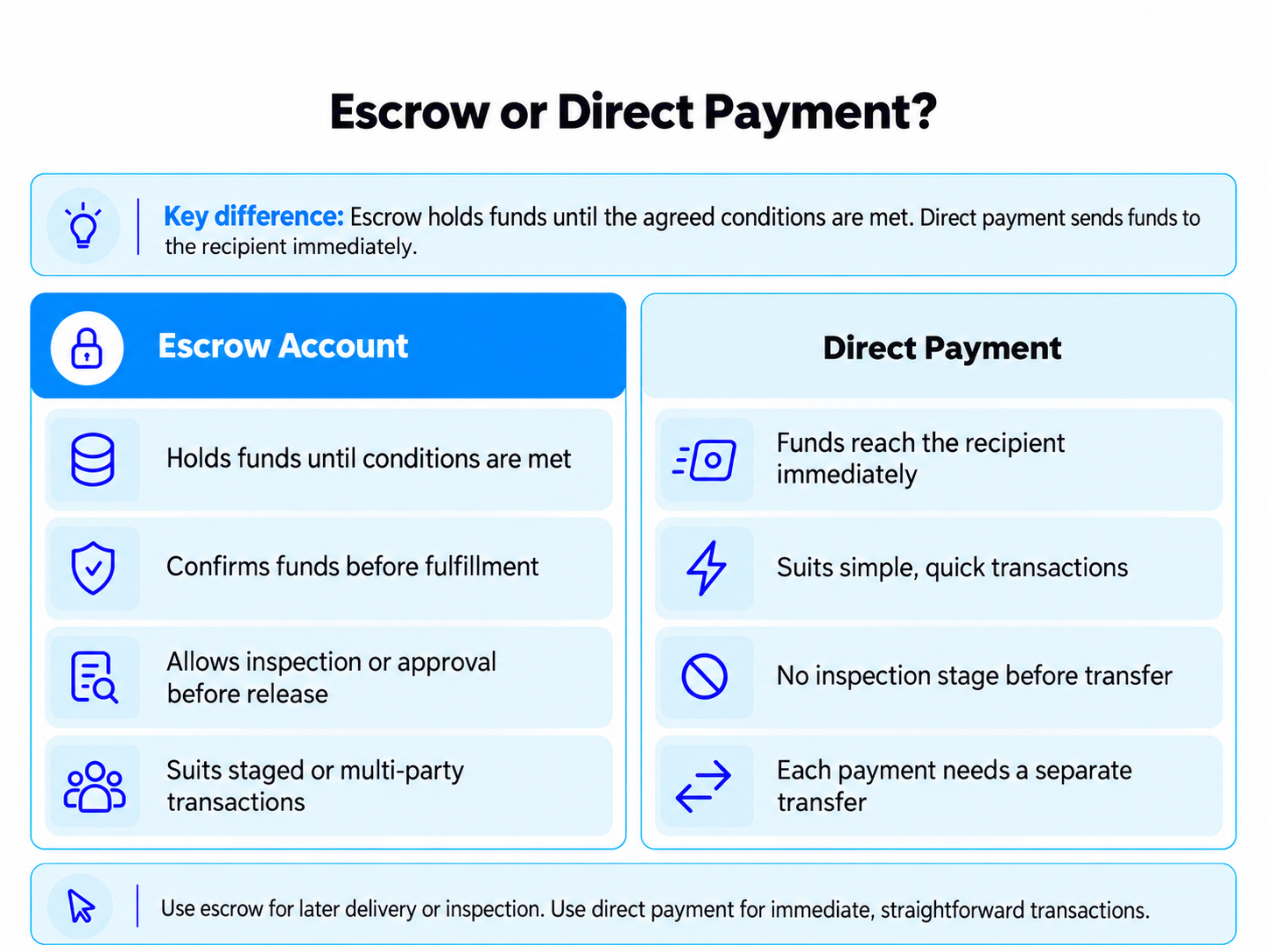
A direct payment reaches the recipient as soon as it is transferred. With escrow, the funds are held during the deal and released once the agreed payment terms are met.
Key differences between direct payment and escrow include:
| With an Escrow Account | Direct Payment |
|---|---|
| Funds are deposited before work starts, subject to release terms. | Funds reach the recipient upon transfer. |
| The seller gets confirmation that funds are held. | The seller relies on the transfer arriving. |
| The buyer has time to inspect the product or service and check the agreed delivery terms. | Funds move before inspection is complete. |
| All amounts due to all parties are paid automatically from escrow. | Each payment needs its own transfer by the parties. |
| Fund movements form part of the deal’s record. | The transfer record is separate from the agreement |
The right method depends on the deal, delivery process, payment terms and need to separate the initial payment from release to the recipient.
When Should You Use an Escrow Account?
Escrow is especially necessary when a deal involves one or more of the following circumstances:
- There is a gap between payment and delivery.
- Payment depends on meeting a set condition.
- The item or work needs inspection or approval before payment.
- The project has stages, each with a separate payment.
- It involves several parties or payees.
- Payment requires a document or a specific procedure.
These features determine the need for escrow, regardless of the sector in which the deal takes place.
Where Is Escrow Used?
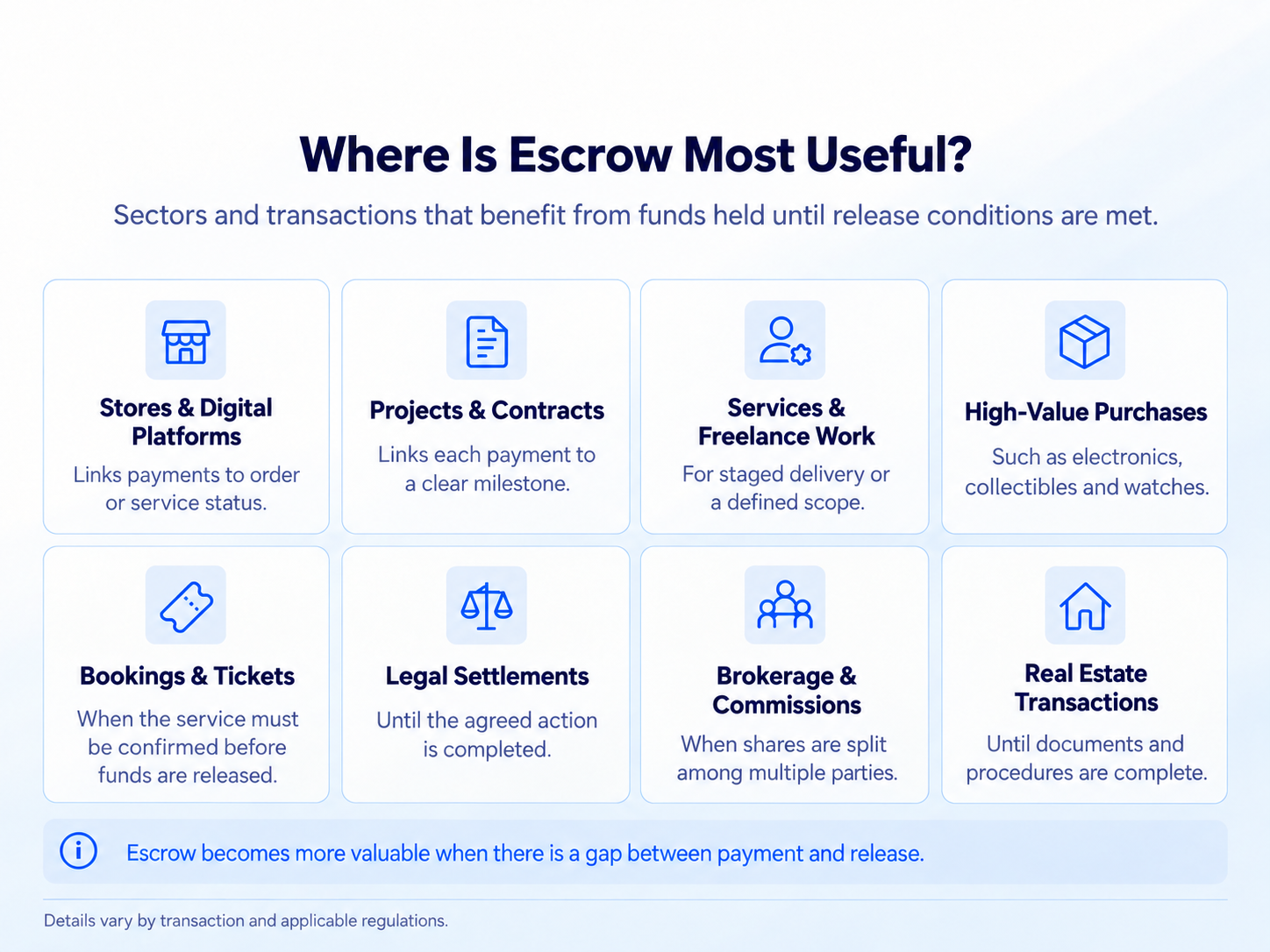
Escrow accounts serve many sectors and types of deals. Details and procedures vary with the nature of each deal. Common uses include:
Escrow for Real Estate Deals
Escrow can hold funds for a property purchase until all required procedures, documents and ownership transfers are complete. It may hold the full price, part of it or a deposit, depending on the deal, agreement and applicable rules.
Escrow Accounts for Online Stores
Stores and platforms can link payments to order status through an escrow API. An order automatically becomes an escrow deal based on the listing’s terms, specifications and images. The buyer deposits the funds, then preparation, shipping or service delivery begins. Payment is released when the status set in the deal’s terms is reached.
This helps platforms and digital markets where buyers and sellers trade remotely or for the first time.
Escrow for Brokered Deals
Some deals involve a buyer, seller and broker, or several suppliers or recipients. Each share and its release terms can be set upfront, with funds split according to the outcome.
This suits brokerage and commission deals, and contracts or projects that pay several parties.
Escrow for Dispute Settlements
Under a legal settlement payment may follow a step such as signing a settlement, meeting an obligation or completing an agreed procedure.
Funds can be held while these terms are being met, then released to the rightful recipient once the required step is complete.
Who Manages Escrow?
An escrow provider manages it: a specialist digital platform that creates the deal, records the agreement, holds funds, tracks when payments are due, releases them when terms are met, and handles funds according to any cancellation or dispute outcome.
Waffy holds transaction funds in a neutral escrow account separate from its own accounts and those of the parties. Release follows the recorded terms, using Saudi banks and approved payment gateways to hold and transfer funds. Waffy also resolves escrow disputes through the approved process within the set deadlines.
Key Escrow Account Terms
| Term | Meaning |
|---|---|
| Escrow Balance | The amount held in escrow at a given stage of the transaction. |
| Deposit Funds | Moving money from the payer to the escrow account. |
| Hold Funds | Keeping funds in the account while the deal’s terms are met. |
| Release Funds | Allowing funds to move once release terms are met. |
| Release Term | An event or obligation to fulfil before payment becomes due. |
| Review Period | The agreed time to inspect a product or service after receipt under the deal’s terms. |
| Escrow Agent | The neutral party managing escrow under the agreement and applicable rules. |
| Milestone Payment | Part of a project or contract’s value tied to a set stage. |
| Dispute Resolution | Resolving a dispute that affects the deal’s outcome and deciding how to handle its funds. |
| Deal Settlement | Making the final payments and closing the obligations linked to the deal. |
You can also see the Escrow Glossary from Waffy to learn more terms relating to escrow, payments and contracts.
How to Use Escrow Through Waffy
Waffy helps individuals and businesses manage deals through escrow. Both parties begin on the personal dashboard or the Waffy App by recording the deal’s details, value, delivery and release terms. The payer then deposits the funds in escrow.
The seller or provider fulfils their commitment. The deal is tracked through its stages until release terms are met and the recipient is paid.
Individuals can use Waffy for buying, selling, services, freelancing and other direct transactions.
Businesses can use the Waffy Business Portal to manage projects and contracts, milestone payments and deals with several parties or recipients.
Stores and digital platforms can also integrate escrow through the Waffy API, making deal creation, status tracking and payment management part of the platform’s user experience.
For answers to all your questions about how transactions work on Waffy’s escrow platform, visit the Help Center.
Common Questions
Learn More About Escrow with Waffy
What Can Be Held in an Escrow Account?
It depends on the deal. For sales, services and projects, it is usually the agreed price or payment. Other accounts may hold funds for property purchases, settlements or specific financial obligations.
How Does Escrow Differ from a Bank Account?
A regular bank account serves its owner’s daily finances under their control. Escrow serves a specific deal and is managed by a neutral escrow agent. Its terms govern when funds are released and who is entitled to receive them.
Is Escrow Secure?
Yes. Escrow is neutral and secure. Safety depends on the provider, how funds are held, clear deal terms, and verification, payment and dispute procedures. Read the terms of service and fund-handling process before starting. Waffy uses escrow accounts in partnership with Saudi banks and payment gateways approved by the Saudi Central Bank.
How Long Does Escrow Take?
Timing depends on the deal, work, shipping and inspection periods, and the parties’ terms. A product sale may take a few days; staged projects and contracts follow their agreed schedules.
Can Funds Be Refunded from Escrow?
A refund is possible when the deal’s cancellation or refund terms are met. The amount and method depend on the deal’s stage, its terms and the outcome of any related dispute.
Escrow vs. Escrow Account: What Differs?
Escrow is the process of holding funds with a neutral party until agreed terms are met. An escrow account is the account where those funds are held for the duration of the transaction.